How to Build Useful Reply Stickers: A Practical 32-Sticker Set

A practical guide to planning reply-focused LINE stickers, including set balance, phrase variations, poses, readability, and final checks.
Useful sticker sets help people answer quickly without interrupting the flow of a conversation. This guide explains how to build a 32-sticker set around acknowledgements, thanks, greetings, apologies, and status updates while keeping each reaction visually distinct.
Key points for reply-focused stickers
- 1Cover acknowledgement, thanks, support, and apologies first
- 2Create variations with different levels of warmth
- 3Use short text and large expressions
- 4Keep everyday phrases at more than half of the set
- 5Check the full sheet for repeated poses
1Start with frequently used replies
List the phrases that repeatedly appear in real chats: okay, thank you, good work, sorry, please, I will check later, and I am on my way.
Secure replies, greetings, thanks, apologies, and schedule updates before adding character jokes or decorative reactions.
- Both positive and negative responses are included
- Thanks and apologies are covered
- Status updates are included
- There are casual and polite options
2Balance a 32-sticker set
A useful starting point is six acknowledgement stickers, six thanks and support stickers, six greetings, four apologies and requests, six status updates, and four emotional or humorous reactions.
The exact ratio can change, but everyday replies should remain the core of the set.
3Differentiate with expression and pose
Similar phrases become useful when their emotional temperature changes. A small nod, an energetic raised hand, and a sleepy response all communicate agreement in different situations.
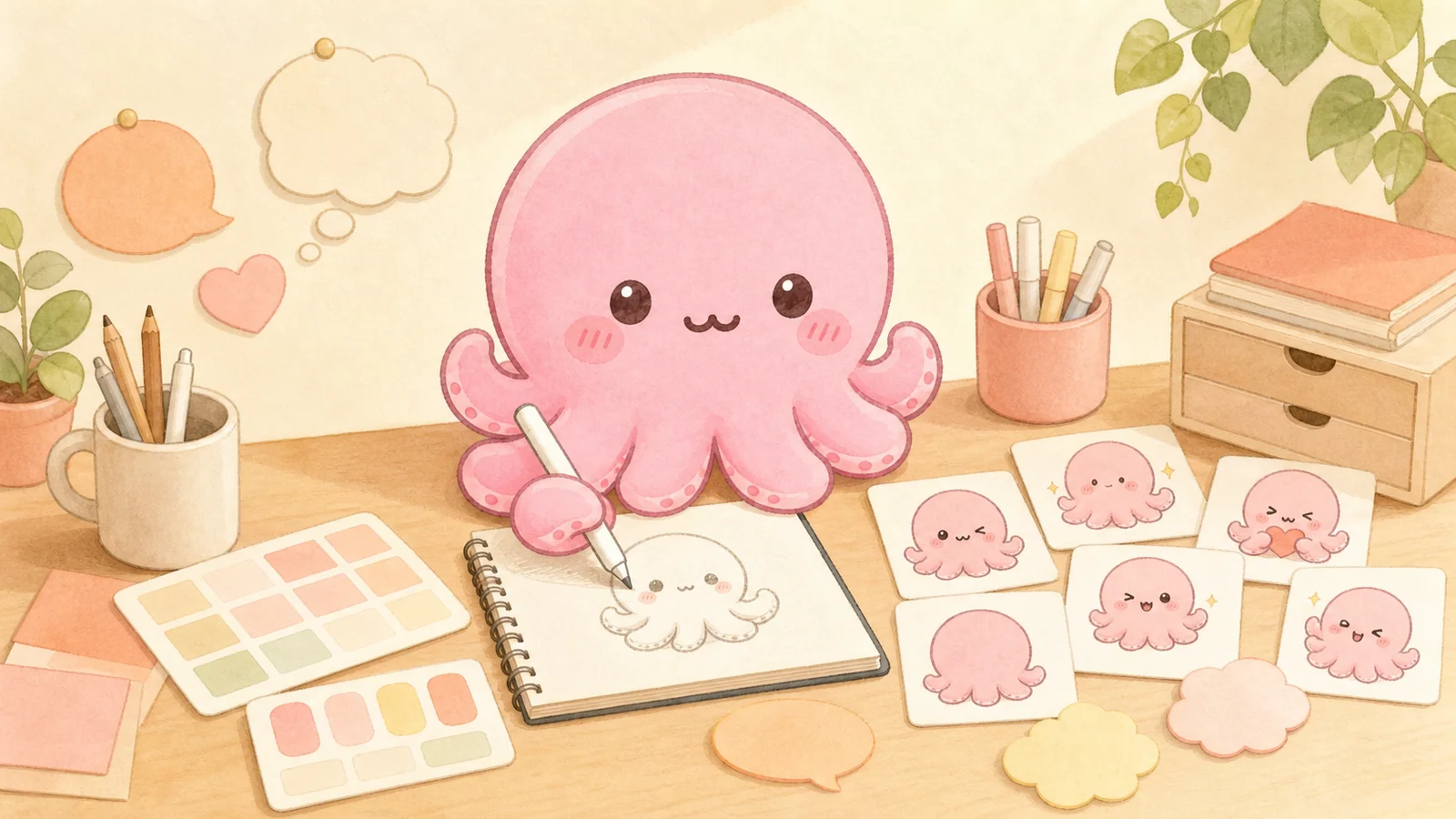
The article illustration shows Furifuri Puppy choosing among speech bubbles, using simple symbols to represent acknowledgement, affection, and hesitation.
4Keep the text short and readable
Reply stickers are read quickly, so preserve only the core message. Keep typography and outlines consistent across the set.
When using multiple lines, make the most important word largest and verify readability at chat size.
5Review the complete set
Check all 32 stickers together for repeated meanings, expressions, and camera angles.
Replace duplicates with missing conversation roles so every sticker has a clear reason to be sent.
- Every sticker has a clear use case
- Meanings are not overly repetitive
- Poses and expressions vary
- Frequent phrases appear early in the set
Frequently asked questions
QHow many reply stickers should a 32-sticker set contain?
A practical target is roughly 16 to 20 stickers covering acknowledgements, thanks, support, apologies, and status updates.
QCan I include several versions of the same reply?
Yes, when each version serves a different relationship or emotional intensity and uses a distinct pose or expression.
QShould long sticker messages be avoided?
Not completely, but short phrases work better for quick replies. Reserve longer text for a small number of special or humorous stickers.