Easy-to-Use Character Stickers and Emoji: A Practical Guide
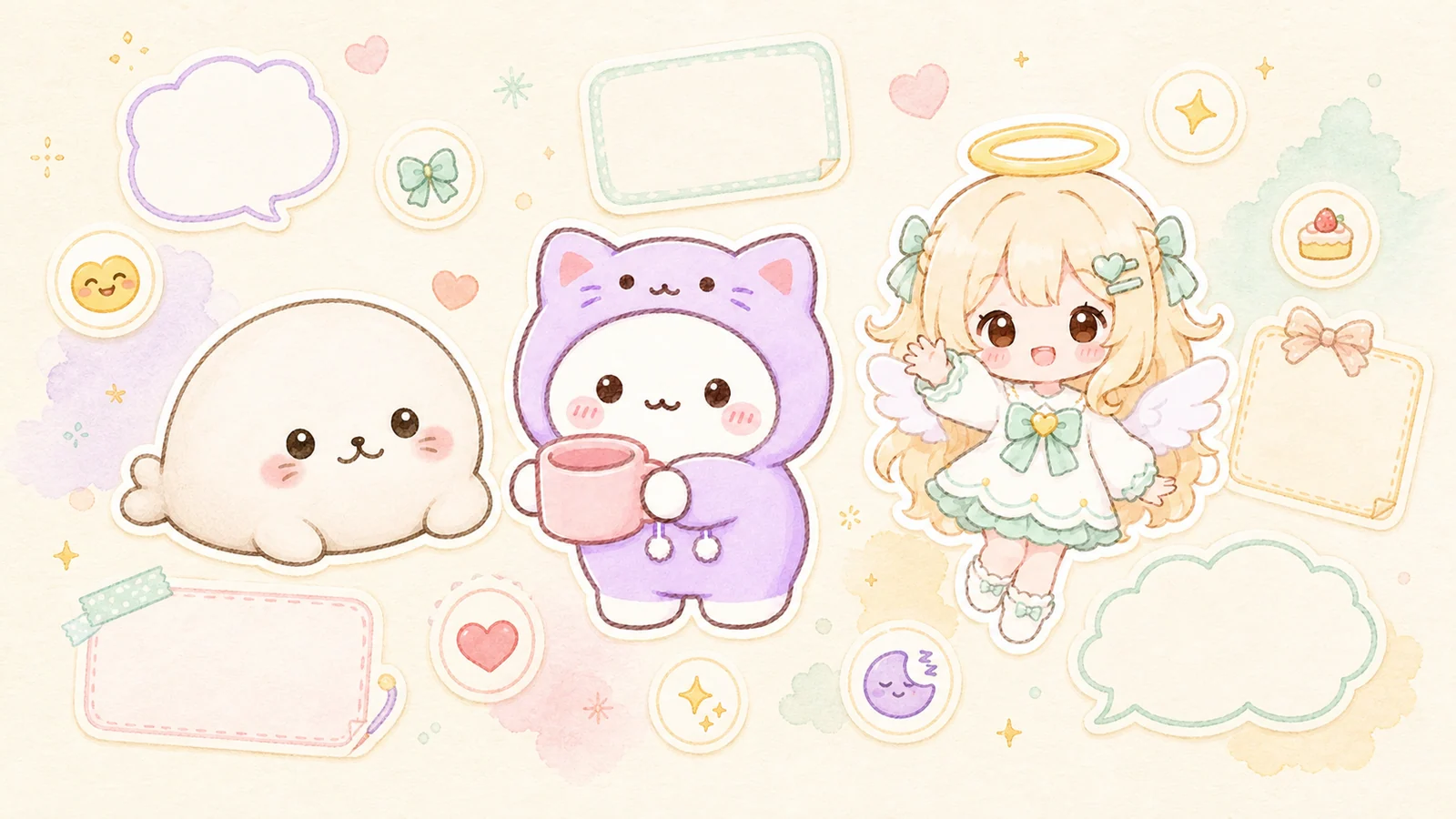
Learn what makes character stickers and emoji easy to use every day. Compare their roles and choose gentle animals, relaxed characters, pairs, humor, or bold personalities for different chats.
A character can be adorable and still be difficult to use in conversation. Everyday usefulness depends on whether the meaning is quick to choose, the emotional tone fits the recipient, and the character naturally speaks for the user. This guide compares character stickers and emoji, then analyzes several personality types represented in Pochime Studio’s character collection.
What this guide covers
- 1Four qualities shared by practical stickers and emoji
- 2The different roles of character stickers and emoji
- 3How recipient and situation affect usefulness
- 4Strengths of animal, relaxed, paired, humorous, and bold characters
- 5Five checks to make before choosing a set
- 6How to build a small collection without duplicate roles
1Four qualities of easy-to-use character stickers and emoji
First, the conversational purpose should be immediately recognizable. Greetings, confirmations, thanks, and clear gestures such as nods, bows, and applause are easy to place in a real exchange.
Second, emotional intensity should match ordinary life. A collection made only of huge celebrations or strong anger leaves few options for quiet daily replies. Small smiles, mild surprise, and gentle apologies cover more frequent moments.
Third, the expression should not require an extremely specific recipient. Fourth, words and features must remain readable when reduced. Lasting usefulness comes from a practical foundation combined with a controlled amount of character-specific personality.
- Clear greetings, replies, or gratitude
- Everyday levels of emotional intensity
- Several recipient-safe expressions
- Readable words and faces at small size
2Character stickers and emoji serve different roles
Character stickers work well when one image should complete the reply. A large expression, pose, and short phrase can communicate a clear emotional direction such as thanks, exhaustion, or celebration.
Emoji are useful inside or after written sentences. A smile or bow can soften a confirmation without replacing the text, while small faces and objects add personality without taking over the message.
Choose by function rather than asking which format is better. People who send many short replies may rely more on phrase-based stickers, while people who write full sentences may find expressive emoji especially flexible.
3Analyze usefulness by recipient and situation
Family chats often involve meals, travel, schedules, health, and bedtime. A practical set combines gentle character art with short status updates and everyday greetings.
Friend conversations allow more humor, teasing, and dramatic reactions. These become useful when they match the group’s normal tone, but strong rejection or sarcasm still requires an appropriate relationship.
School and work favor clear meanings: confirmation, thanks, encouragement, and apology. A cute design remains practical when wording is readable and the expression does not undermine the intended level of respect.
- Family: plans, meals, travel, and bedtime
- Friends: empathy, humor, and large reactions
- School: confirmation, support, and schedule updates
- Work: acknowledgment, gratitude, and polite apologies
4Character types and where they work best
Gentle animal characters are broadly approachable. Rounded characters such as Mochimochi Azarashi, Mofumofu Koguma, and Mokomoko Rakko suit greetings, gratitude, and caring messages where a soft tone matters.
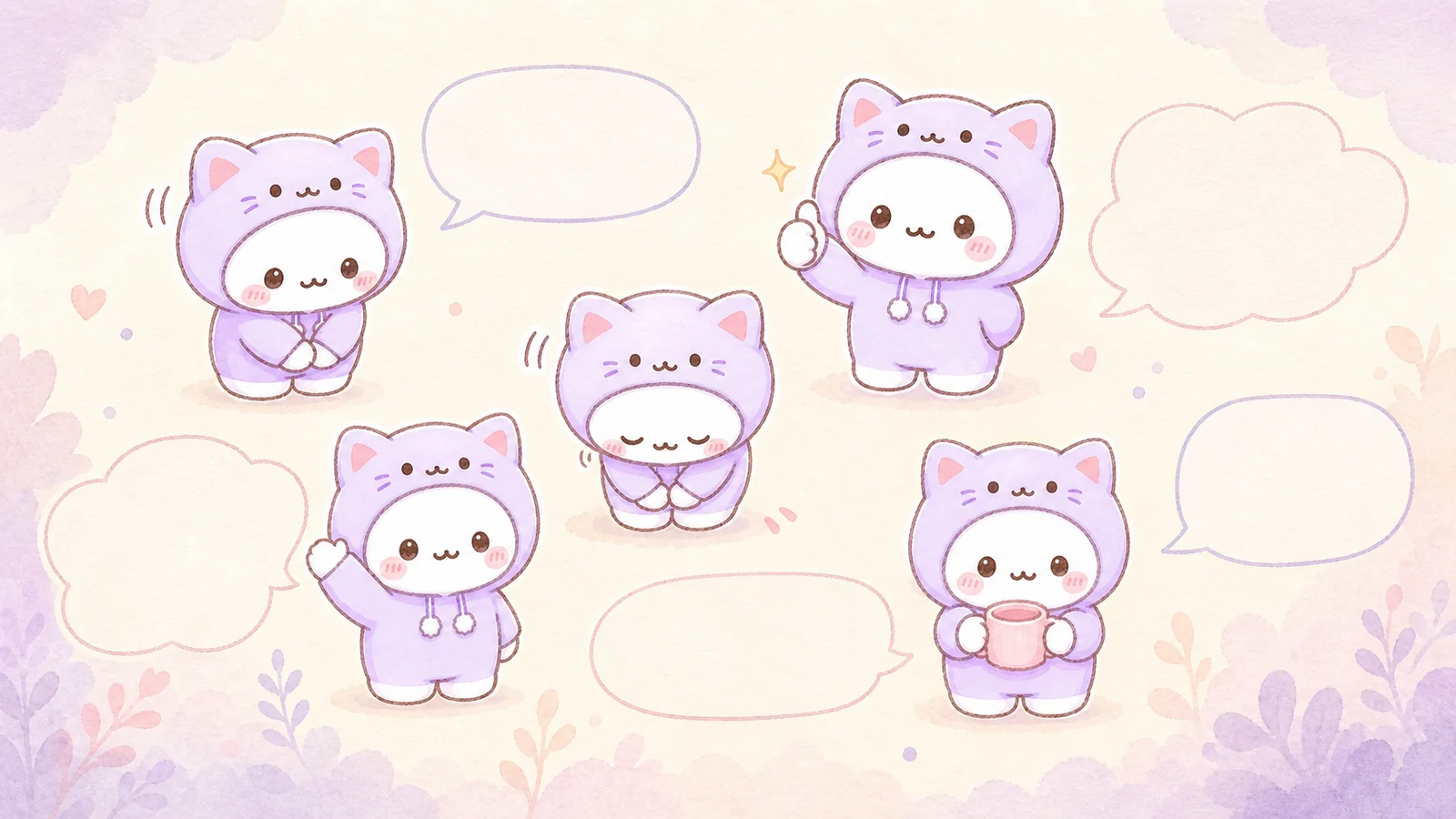
Relaxed characters express feelings that are sometimes awkward to state directly. Darudaru Nyanko and Nemunemu Hitsuji fit tired evenings, school or work updates, and low-energy conversations with familiar people.
Paired characters provide two emotional voices for the same situation. Tenchan and Akuchan can move between bright kindness and a lightly sharp response depending on mood and relationship.
Takomaru adds light humor, while a bold-cute personality such as Mesugaki-chan fits playful replies between close friends. A character does not need to suit everyone; it needs to suit the user’s recurring conversations.
- Gentle animals: broad everyday replies
- Relaxed characters: tired or sleepy moods
- Pairs: multiple tones within one visual world
- Humor: light jokes and playful reactions
- Bold-cute characters: teasing between close friends
5Five checks before choosing a set
Start by counting phrases you actually use every week. A visually appealing set filled with rare situations will be selected less often than one that covers routine greetings and replies.
Look for duplicated meanings. Several confirmations are valuable only when they differ in formality or emotional tone. Then examine balance across positive replies, thanks, apologies, updates, and reactions.
Finally, preview the complete grid for text size, expression clarity, and consistency with your normal voice. If the purpose of each design is recognizable within a second, the set is easier to use during active conversation.
- Contains several phrases used every week
- Similar phrases have distinct purposes
- Conversation roles are reasonably balanced
- Words and expressions read in the grid
- Tone fits both user and recipient
6Combine stickers and emoji without duplicate roles
Begin with one core character sticker set containing greetings, replies, thanks, and apologies. Add one themed set for a personal mood or interest, such as sleep, food, seasonal events, or jokes.
For emoji, start with flexible faces, bows, hearts, food, and weather symbols that can support sentences. They do not need to show the same character, but compatible colors and emotional intensity create a more coherent chat style.
A useful collection is not defined by size. It has the necessary conversation roles with little unnecessary duplication, allowing the right reaction to be found quickly.
7Choose where character and real use overlap
The most useful character sticker or emoji is not simply the one with the most features. Its personality should match the phrases you send, the people you talk with, and the emotional temperature of those conversations.
Gentle animals offer broad flexibility, relaxed characters express low-energy moods, pairs offer tonal choice, and humorous or bold-cute characters bring personality to close-friend chats.
Before choosing, look beyond one favorite image and identify at least three specific situations, recipients, and messages the complete set can serve. A character attached to real use cases is far more likely to remain active in your chat history.
Frequently asked questions
QWhat makes a character sticker easy to use every day?
It covers frequent greetings, confirmations, thanks, encouragement, or apologies at a moderate emotional intensity, while remaining readable at small size and natural in the user’s normal voice.
QAre character stickers or emoji more useful?
Stickers are effective when one image completes a short reply. Emoji are effective when a written sentence needs added warmth or expression. The better choice depends on how you communicate.
QWhich characters work well for school or work chats?
Calm characters with clear confirmation, gratitude, encouragement, and apology are generally easier to use. Always check that wording and humor fit the actual relationship.
QWhy do some cute sets stop being used?
They may focus on rare emotions or inside jokes while missing routine conversation needs. Mapping a set to recent real chats before choosing can reveal this mismatch.
QHow many sticker and emoji sets are enough?
There is no fixed number. One core reply set, one personal theme set, and one flexible emoji set can cover many conversations when their roles do not heavily overlap.